The Negative Space Between Moves: Why Refined Australian Players Treat Losses as Compositional Necessity
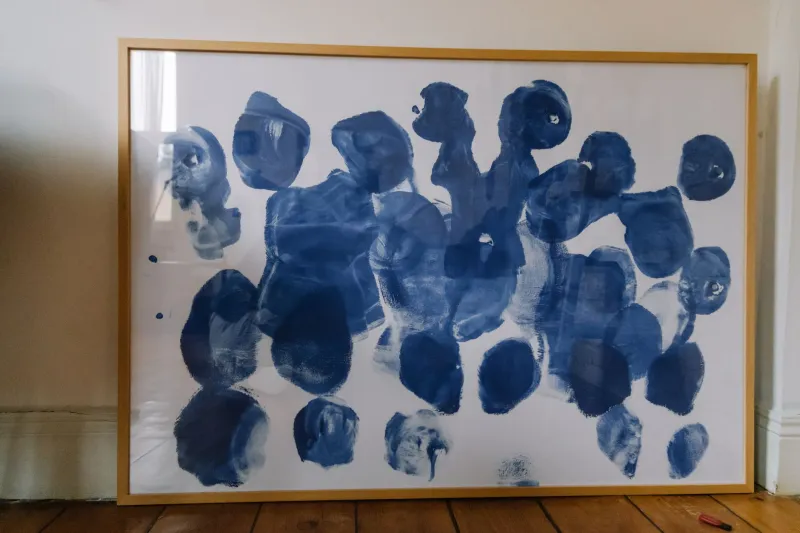
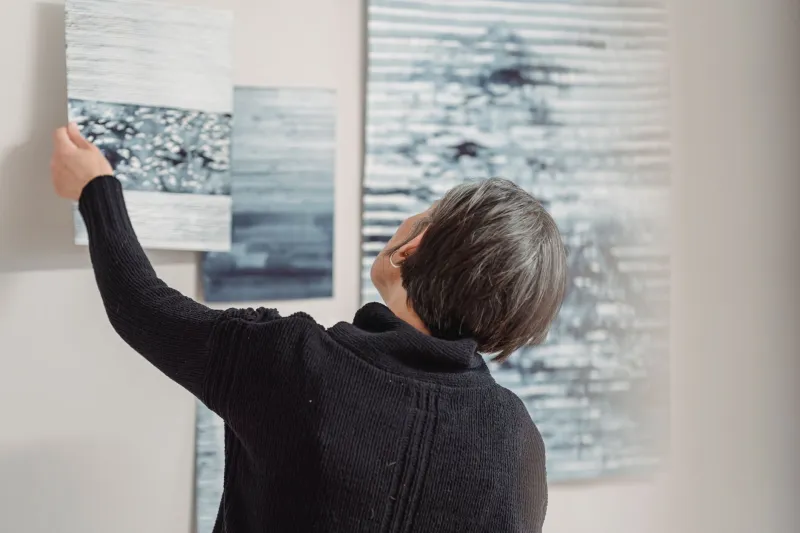
There is a particular kind of stillness in the work of the Japanese ink painters who left vast stretches of silk untouched. The empty ground was not an oversight. It was the point. The brushstrokes derived their power precisely from what surrounded them — from the considered absence that gave form its weight and intention its clarity. For Australia's most thoughtful players, a losing session carries an analogous significance. It is not a flaw in the composition. It is the negative space that makes the composition whole.
This is not a comfortable idea to arrive at quickly. The dominant cultural narrative around gambling loss is one of shame, urgency, and remediation — a problem to be solved, a deficit to be recovered. But among the genuinely sophisticated players who frequent Australia's premium digital environments, a different philosophical framework has quietly taken hold. One that borrows as readily from aesthetics as it does from probability theory.
Void as Vocabulary
In the visual arts, negative space is the area surrounding the subject — the shape defined not by what is present but by what is deliberately absent. Sculptors working in the tradition of Constantin Brâncuși understood that the air moving through a form was as expressive as the bronze itself. Architects designing the spaces between buildings in Melbourne's Docklands precinct know that the courtyard breathes life into the structures flanking it.
Apply this sensibility to the gaming session and something genuinely transformative occurs. A loss ceases to be a rupture in an otherwise coherent narrative and becomes, instead, a structural element — one that defines the contours of the wins surrounding it, that gives weight to the patience exercised before and after it, that marks the rhythm of a practice sustained across time.
This reframing is neither denial nor rationalisation. It is, rather, a deliberate act of aesthetic cognition — the decision to interpret one's experience through a lens that illuminates rather than diminishes.
The Shame Narrative and Its Limitations
For most players, the psychological architecture of loss is built on a foundation of shame. The loss is experienced as evidence of a personal failure: poor judgement, insufficient discipline, bad character. This interpretation is not only emotionally corrosive — it is analytically useless. Shame forecloses examination. It encourages either frantic recovery attempts or complete withdrawal, neither of which constitutes the kind of measured, deliberate engagement that characterises elite play.
Australia's cultural relationship with gambling is complex and historically layered. From the early colonial fascination with two-up to the contemporary dominance of sports wagering in the national conversation, loss has often been publicly coded as embarrassment. The sophisticated player recognises this cultural inheritance and consciously refuses it — not through bravado, but through a more nuanced philosophical replacement.
When loss is understood as compositional rather than confessional, the player is freed from the paralysis of self-judgement and returned to the clear-eyed practice of strategic assessment.
Setback as Structural Interval
Consider how composers use silence. In Beethoven's later quartets, the rests are not merely the absence of sound — they are charged with everything that preceded them and everything that follows. The silence between movements carries the emotional residue of one passage and the anticipatory tension of the next. Remove those rests and the music collapses into undifferentiated noise.
A gaming session structured entirely around wins — were such a thing possible — would carry no meaning. The wins would register as a flat, undifferentiated line. It is the setback, the session that does not resolve as intended, that creates the contrast through which genuine achievement becomes legible. The elite player does not merely tolerate this reality. They incorporate it into their understanding of what a coherent, long-term practice actually looks like.
This is the essence of what might be called compositional thinking at the table: the recognition that the session in front of you is not the whole work. It is a phrase within a larger movement, a brushstroke within a canvas that extends across weeks and months and years of disciplined engagement.
The Long Arc of Aesthetic Practice
Australia's most discerning players tend to share a particular quality of temporal perspective. They are not optimising for the session. They are curating an ongoing practice — one that will, over sufficient time, reflect their values, their discipline, their willingness to engage seriously with both the mathematical and the psychological dimensions of elite gaming.
Within that extended timeframe, individual losses take on an entirely different character. The session that ends in deficit becomes a data point, a counterpoint, a moment of necessary tension within a larger arc. The player who can genuinely hold this perspective — not as a convenient post-hoc narrative but as a deeply internalised aesthetic philosophy — is the player who will remain composed under pressure, who will make decisions from a position of clarity rather than anxiety.
This is the philosophical shift that separates the sophisticated player from the reactive one. It is the difference between the artist who understands that the difficult passage in their work is essential to its integrity, and the one who abandons the canvas the moment the composition becomes challenging.
Cultivating the Compositional Eye
Developing this perspective is not a passive process. It requires the same kind of deliberate cultivation that any aesthetic sensibility demands — exposure to ideas, reflection on experience, and a willingness to sit with discomfort long enough to understand its function.
For players operating within Australia's premium online environments, the tools for this cultivation are readily available. The capacity to review session histories, to track patterns across time, to observe one's own decision-making from a position of retrospective calm — these are not merely analytical resources. They are the instruments through which compositional thinking is developed and refined.
The player who reviews a losing session not with the question "what went wrong?" but with the question "where does this sit within the larger work?" is already operating at a fundamentally different register. They are, in the truest sense, approaching their practice as an art form — one in which loss, properly understood, is not the enemy of mastery but one of its most essential ingredients.
The Canvas Remains Open
The most enduring works of art are rarely those that proceed without friction, without shadow, without the tension of unresolved passages. They are the works that acknowledge the full range of human experience — including difficulty, including absence, including the moments that do not resolve neatly — and find within that range a coherence that transcends any single element.
Australia's most refined players are, in their best moments, engaged in something not entirely unlike that project. They are composing a practice that will hold its integrity across time, that will reflect genuine discipline and genuine thought, and that will find its meaning not in the avoidance of loss but in the quality of attention brought to every element of the game — including the spaces between the wins.