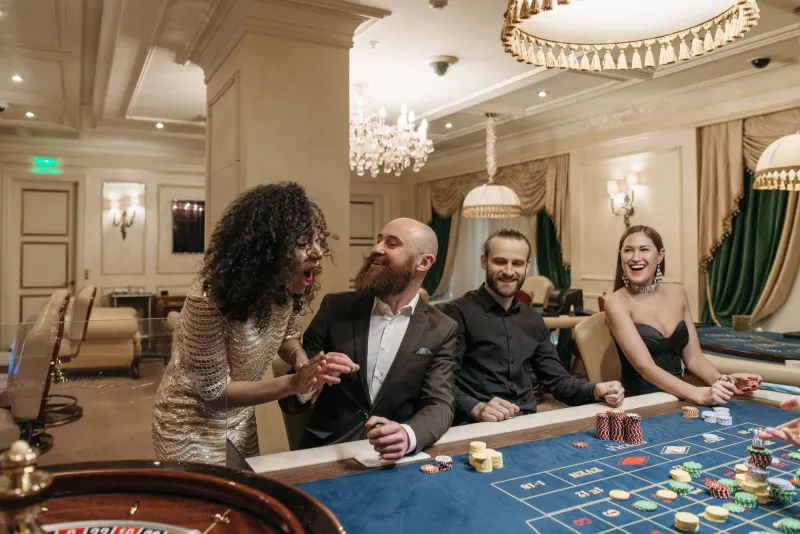
The Connoisseur's Gaze: How a Personal Aesthetic Philosophy Elevates Play from Pastime to Practice
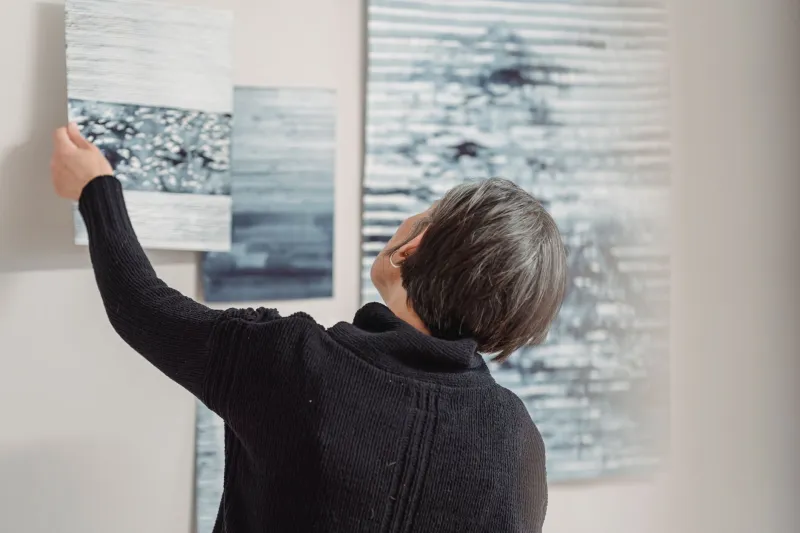
There is a particular quality shared by the patrons who move through the upper echelons of Australian gaming culture—a quality that has less to do with bankroll size or technical knowledge than with something altogether more elusive. Call it discernment. Call it taste. The most apt description, perhaps, borrows from the world of fine art: these players possess a curator's eye.
In the gallery context, curation is never passive. The curator does not simply collect; they edit, contextualise, and arrange. They develop over years a philosophy of what belongs and what does not, what serves the larger vision and what merely clutters it. The serious Australian player, whether they articulate it in these terms or not, undergoes a strikingly similar process—and those who do so consciously tend to arrive at markedly different outcomes than those who approach gaming as an unstructured pursuit.
From Accumulation to Curation
The casual gambler accumulates experiences indiscriminately. A new game appears; they try it. A promotional offer arrives; they accept it. A platform promises a generous welcome bonus; they register without further inquiry. There is nothing inherently wrong with this approach—it is how most people encounter the world of online gaming—but it is fundamentally the approach of the tourist rather than the connoisseur.
The shift from accumulation to curation begins with a single, clarifying question: What am I actually here for?
For some players, the honest answer is relaxation—a deliberate disengagement from the pressures of professional life. For others, it is the intellectual challenge of probabilistic thinking, the pleasure of mastering a game's internal logic. For others still, it is the aesthetic experience itself: the elegance of a well-designed baccarat interface, the choreography of a live dealer's movements, the particular tension of a hand played with complete composure.
None of these motivations is superior to the others. What matters is that the serious player knows which applies to them—and builds their gaming practice accordingly.
Game Selection as Artistic Statement
In the same way that a collector's acquisitions reveal their values and sensibilities, a player's game selection is an implicit statement of aesthetic preference. The Australian player who gravitates consistently toward European roulette over its American counterpart is not merely making a mathematically sound choice—though they are doing that as well. They are expressing a preference for precision over spectacle, for the clean geometry of a single-zero wheel over the cluttered pragmatism of a double-zero variant.
Similarly, the player who chooses live dealer blackjack over its RNG equivalent is selecting for atmosphere, for the human element, for the particular texture of a game played in real time against a real opponent. These are aesthetic distinctions as much as strategic ones, and attending to them carefully produces a gaming portfolio—to borrow a term from both the art world and the financial sector—that is coherent rather than arbitrary.
Coherence, in this context, is not merely a stylistic virtue. It correlates directly with discipline. The player who has thought carefully about why they play certain games is far less likely to be drawn off course by novelty or by the particular seductiveness of a game that does not suit their temperament or their strategy.
Platform as Gallery Space
The serious collector does not display their acquisitions in a warehouse. The environment in which art is encountered shapes the encounter itself—the quality of light, the spacing between works, the overall curatorial logic of the space. Online gaming platforms function in precisely the same way, and the discerning Australian player treats platform selection with corresponding seriousness.
A platform's interface communicates its values before a single bet is placed. Does it prioritise clarity or spectacle? Does its game library reflect genuine curation—a thoughtful selection of premium titles—or does it simply aggregate volume in an attempt to appear comprehensive? Are the live dealer studios designed with attention to visual detail, or do they convey the aesthetic of a television studio that has seen better decades?
These are not trivial questions. The environment in which one plays shapes concentration, mood, and ultimately decision-making. The player who has chosen their platform as carefully as a gallery-goer might choose which institution to visit on a Saturday afternoon is already operating at a different level than one who signed up wherever the algorithm directed them.
Betting Patterns and the Grammar of Restraint
If game selection is the vocabulary of a player's aesthetic philosophy, betting patterns are its grammar—the structural logic that gives individual decisions coherence and meaning. The elite Australian player understands that a betting pattern is not merely a risk management tool; it is a form of self-expression, a declaration of values under conditions of uncertainty.
The player who bets consistently within a predetermined range, who neither chases losses nor inflates wagers in the flush of a winning streak, is practising something analogous to what critics call formal restraint in literature or visual art. They are choosing to work within constraints—not because the constraints are externally imposed, but because they understand that discipline is itself a form of sophistication.
This is precisely the quality that separates the serious player from the casual one: not the ability to win more, but the cultivation of a relationship with loss and gain that is governed by principle rather than impulse. A painting is not improved by adding more colour wherever space permits. A game session is not improved by escalating stakes whenever the mood strikes.
Developing the Eye Over Time
It is worth acknowledging that curatorial sensibility is not innate. The most celebrated collectors in Australian cultural life—from the philanthropists who have shaped institutions like the National Gallery of Victoria to the private collectors whose homes have become minor museums in their own right—developed their eye over decades of looking, comparing, reflecting, and revising.
The serious player's aesthetic philosophy develops in the same way: through accumulated experience that is actively processed rather than passively undergone. Keeping a record of sessions—not merely wins and losses, but the quality of the experience, the decisions made and the reasoning behind them—accelerates this development considerably. It transforms play from a series of disconnected events into a continuous practice, one that improves with attention and deliberate reflection.
Australia's most sophisticated gaming culture has always understood this. The members' rooms of Melbourne's premier establishments, the invitation-only high-roller salons that operate at the intersection of discretion and luxury—these spaces have always been populated by players who treat their engagement with gaming as a form of ongoing self-cultivation, not merely a recreational pursuit.
The Philosophy as Practice
To develop a personal aesthetic philosophy of play is not to make gaming more complicated. It is, paradoxically, to simplify it—to replace the noise of endless options and reactive decisions with a clear, principled framework that makes each choice easier and more coherent.
The curator does not agonise over every acquisition because they have already done the deeper work of knowing what they value. The serious player does not agonise over every bet because they have already established the framework within which that bet will be made.
This is, ultimately, what distinguishes the connoisseur from the casual visitor: not greater luck, not even necessarily greater knowledge, but a cultivated relationship with the practice itself—one that transforms chance into something approaching craft.